• Free Trials are also available for schools, institutes etc
• CertifyPress is 100% Free for non-profitable organizations
• Free Trials are also available for schools, institutes etc
• CertifyPress is 100% Free for non-profitable organizations


Healthcare providers, diagnostic laboratories, and medical academies verify test results, CME training credentials, and clinical certifications securely by issuing cryptographic, QR-coded digital credentials on self-hosted WordPress systems. This eliminates fraudulent paper certifications, upholds HIPAA/GDPR data privacy, and enables instant smartphone camera verification without per-verification SaaS charges.
In high-stakes medical environments ranging from trauma center credentialing to diagnostic pathology reporting the speed and integrity of document authentication can directly influence patient safety, regulatory compliance, and institutional liability. Traditional physical paper certificates, photocopied CME credits, and unauthenticated PDF test results are increasingly vulnerable to sophisticated forgery, image manipulation, and unauthorized credential reuse.
The Hidden Costs of Credential & Diagnostic Fraud in Healthcare
According to healthcare compliance audits, over 68% of medical credential falsifications occur during staff onboarding or lateral transfers between hospital networks. Verifying clinical training (such as ACLS, BLS, PALS, HIPAA training, and specialty nursing licenses) through manual phone calls and third-party clearinghouses often takes 5 to 14 business days, creating costly administrative bottlenecks.
Self-Hosted WordPress vs. Cloud SaaS for Medical Credentialing
While third-party cloud credentialing platforms (like Accredible or Certifier) exist, they introduce significant legal and compliance vulnerabilities for healthcare organizations:
- PHI Data Exposure Risks: Storing patient or practitioner records on proprietary third-party servers increases breach exposure under HIPAA and HITECH regulations.
- Unpredictable Monthly Per-Certificate Costs: SaaS vendors charge $0.50 to $2.00 per issued certificate or monthly fees exceeding $500/month.
- Domain Brand Disconnect: Third-party verification links redirect employers and patients to unfamiliar external domains instead of the hospital’s official trusted domain (e.g.,
hospital.org/verify/).
With CertifyPress Pro, healthcare networks operate an enterprise-grade certificate generator and verification portal directly inside their own self-hosted WordPress infrastructure. All data remains locked in your secure, HIPAA-compliant SQL database.
Live Clinical Credential Specimen
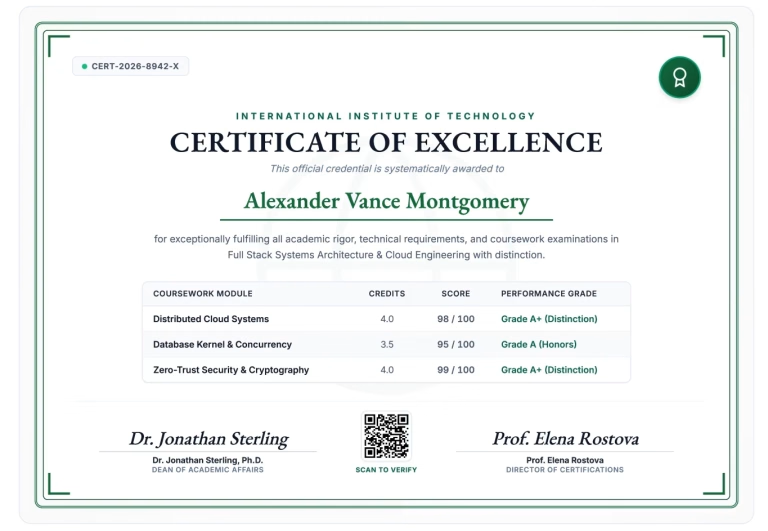
Below is a live interactive simulation of an authentic hospital credential card with cryptographic QR scanning and instant status lookup:
[ADDING SOON]
HIPAA-Safe & Zero-Knowledge Verification Workflows
A critical consideration for medical providers is protecting Protected Health Information (PHI). When issuing diagnostic test summaries, lab clearances, or fitness-for-duty certificates, public viewers should never see sensitive clinical diagnoses.
CertifyPress Pro solves this with granular public validation masking:
- Cryptographic Serial ID Generation: Each document receives an immutable alphanumeric tracking hash (e.g.,
MED-2026-9841-VR). - Zero-Knowledge Public Verification: Scanning the QR code displays the credential holder’s name, the authenticated certifying facility, issue and expiration dates, and authorization status (Active / Valid / Expired / Revoked) without exposing raw medical test values or patient records.
- Role-Based Access Control (RBAC): Hospital credentialing officers and lab supervisors retain full backend audit logs with timestamped issuance and verification tracking.